

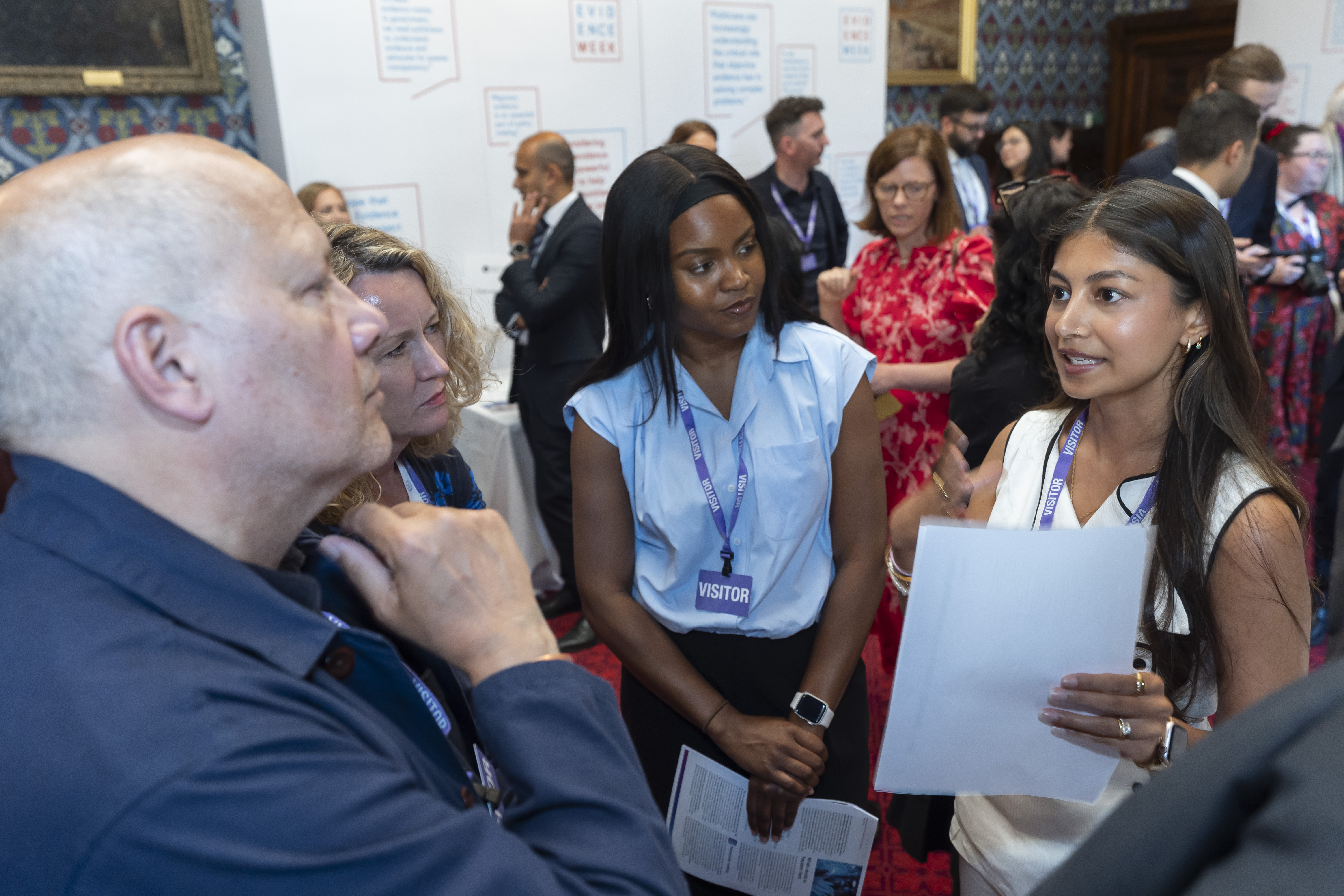
NeuroWare Director, Tony Kenyon, was joined by Latisha Gordon and Aysha Asif Riaz from UCL, and Andre van Schaik from the University of Manchester, in Westminster on 6 July 2026 to meet Members of Parliament and peers to share the latest developments in brain-inspired computing.
As part of Evidence Week in Parliament, the team discussed the opportunities offered by neuromorphic computing, presented policy recommendations and highlighted the need to review current policies in light of the latest available evidence. Evidence Week is a unique annual meeting that brings together the public, parliamentarians and researchers from across the UK to discuss how evidence is used and reviewed in Parliament.
NeuroWare presented its findings to, among others, Eleanor Underwood (Parliamentary Assistant for Baroness Hayter), and Sophie Thorley (Parliamentary Adviser to Julia Lopez MP) and Varuna De Silva (Thematic Lead - AI and Digital for UK Parliament), equipping them with vital information to inform the decisions they make on future policies for computing with far lower energy consumption and far greater computing power.
Professor Tony Kenyon said:
“Brain-inspired, or neuromorphic, computing is a potentially transformative future computing technology that the UK currently leads. It is crucial that policymakers understand the opportunity this represents for the UK. Being able to represent this exciting technology in Parliament is a great opportunity to really raise its profile”
Thanks to the involvement of research partners like UCL and Manchester, members of the public were able to put questions directly to MPs and Lords about evidence use on the issues that matter to them.
Evidence Week, now in its ninth year, is run by the campaigning charity Sense about Science, in partnership with communities and research institutions from across the UK. During the week, MPs meet with leading scientists to get the latest insights on pressing issues covering topics as varied as clean energy to AI sovereignty. It is an opportunity for the public, parliamentarians and researchers to come together to share knowledge and insights. It also empowers legislators to engage with evidence and equips them with the critical tools to handle uncertainty, identify bias and scrutinise underlying assumptions.
Tracey Brown, Chief Executive of Sense about Science, said:
"Between elections, Parliament is responsible for the checks and balances on government policy, for making sure that policy matches the real world and that it is based on sound evidence. Evidence Week offers politicians the chance to engage with leading research groups to discuss their latest findings and tools in rapid-fire briefings that fit between parliamentary business. Varuna De Silva (Thematic Lead - AI and Digital for UK Parliament) and Eleanor Underwood (Parliamentary Assistant for Baroness Hayter were among many this week who met with researchers from UCL to hear about chips inspired by the human brain - an introduction to neuromorphic computing.
Notes to Editors
Evidence Week in Parliament 2026 is organised by Sense about Science. Running from 6-10 July 2026, Evidence Week opened with an in-person reverse select committee hearing where constituents asked MPs about the evidence behind policy issues that matter to them. This was followed by three days of rapid-fire policy briefings from world-class researchers for MPs and peers in Westminster. National experts trained parliamentary staff on how to understand data and research, and scrutinise reports and evidence presented to them. See senseaboutscience.org/evidence-week/ for the full programme.
Sense about Science is an independent charity that promotes the public interest in sound science and evidence. Founded in 2002, Sense about Science works with decision-makers, world-leading researchers and community groups to raise the standard of evidence in public life. It focuses on socially or scientifically difficult issues where evidence is neglected, conflicting or misunderstood. Visit senseaboutscience.org/ or email hello@senseaboutscience.org
A full list of partnering research organisations can be found here: senseaboutscience.org/evidence-week/policy-briefings/